-
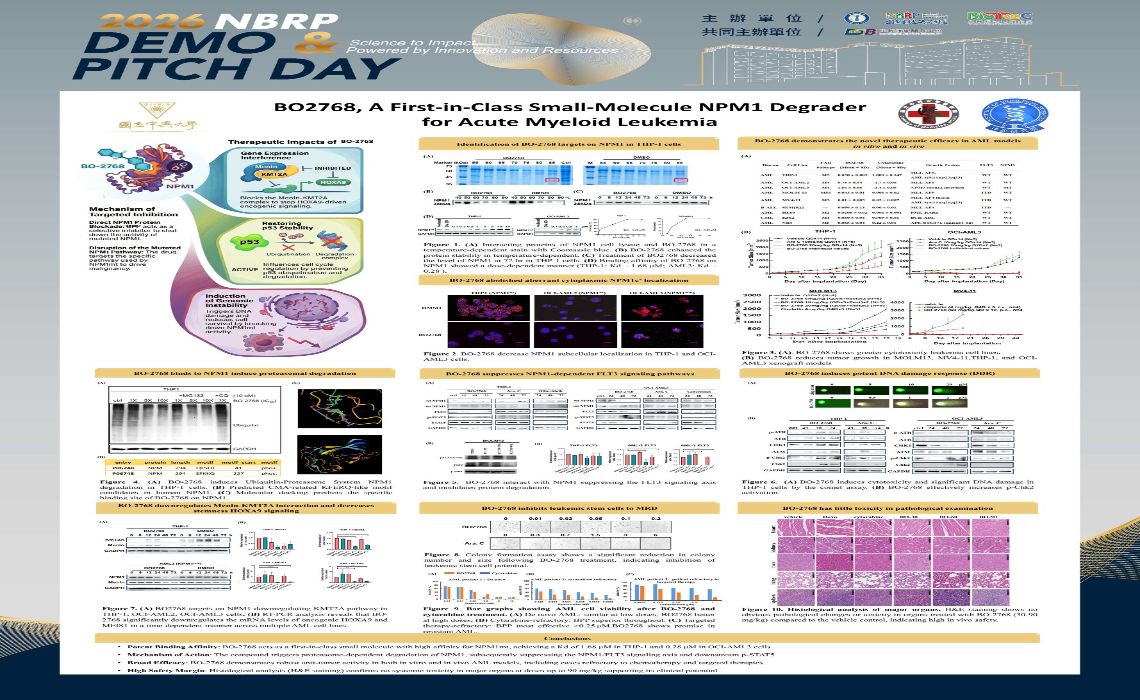
BO2768:以 NPM1 降解重塑急性骨髓性白血病治療的新型首創藥物BO2768: A First-in-Class Small-Molecule NPM1 Degrader for Acute Myeloid Leukemia國立中興大學National Chung Hsing University陳泰霖Tai-Lin Chen發明人:Te-Chang Lee, Tsann-Long Su, Tai-Lin Chen領域:anticancer適應症:AML研發階段:chentl@nchu.edu.tw摘要:BO2768 is a first-in-class small-molecule NPM1 degrader developed for the treatment of acute myeloid leukemia (AML), particularly AML subtypes driven by aberrant NPM1 signaling, FLT3 activation, or KMT2A/menin-related oncogenic programs. Unlike conventional kinase inhibitors or cytotoxic chemotherapy, BO2768 directly promotes degradation of both wild-type and mutant NPM1, thereby disrupting leukemia-associated transcriptional regulation, DNA damage response, and survival pathways.
The innovation of BO2768 lies in its novel mechanism of action, oral drug potential, and ability to address major unmet needs in relapsed, refractory, and molecularly defined AML. Preclinical studies show strong anti-leukemic activity in AML cell models and xenograft systems, supporting its translational potential.
With the growing global demand for precision oncology and targeted AML therapies, BO2768 offers strong market potential. Its competitive advantages include first-in-class NPM1 degradation, differentiated biology from existing menin or FLT3 inhibitors, and potential application in combination treatment strategies.
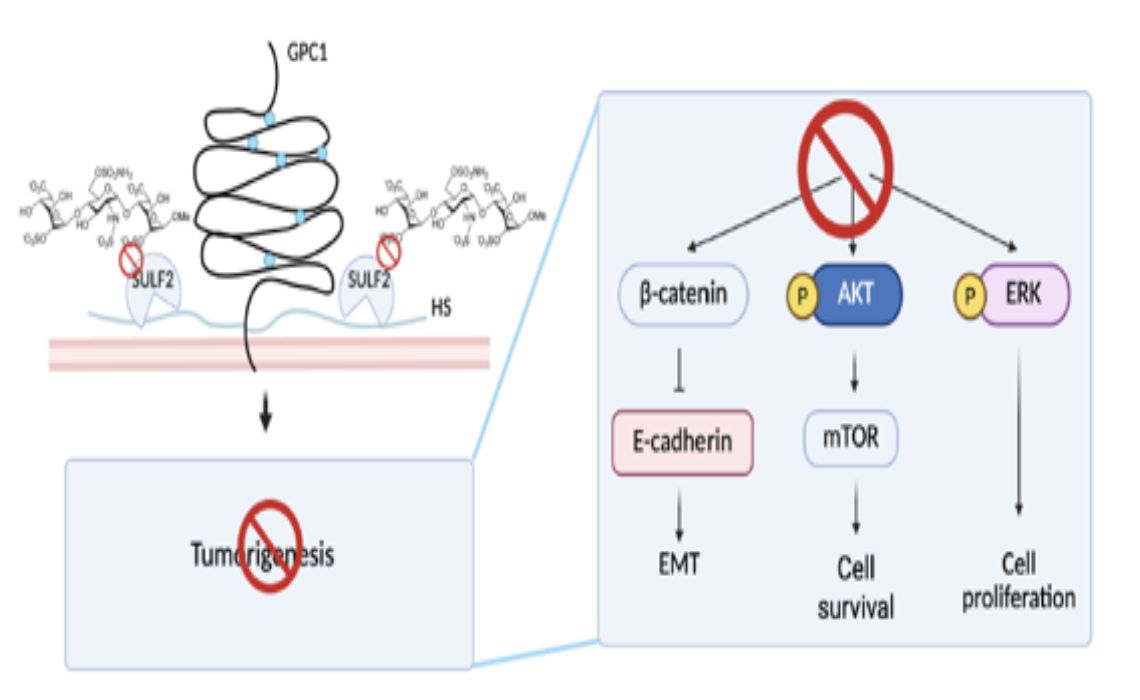
 首創標靶 SULF2–GPC1 訊號軸的新一代胰臟癌與膽管癌治療策略Developing a First-in-class Therapy Targeting the SULF2–GPC1 Signaling Axis for Pancreatic Cancer and Cholangiocarcinoma中央研究院 基因體中心Genomics Research Center, Academia Sinica洪上程Shang-Cheng Hung發明人:洪上程、吳駿一、謝昕樺、張承修領域:新藥開發 (New Drug Development)適應症:胰臟癌、膽管癌研發階段:Pre-clinical摘要:Our technology develops a first-in-class glycan-mimetic trisaccharide inhibitor targeting the extracellular SULF2–GPC1 signaling axis, a novel therapeutic pathway involved in pancreatic cancer and cholangiocarcinoma progression. Unlike conventional intracellular kinase inhibitors, this approach targets a druggable extracellular enzyme to inhibit tumor growth, metastasis, and epithelial–mesenchymal transition (EMT). The inhibitor has demonstrated efficacy in enzyme assays, cell-based studies, and multiple animal models, with favorable preliminary safety. Supported by a proprietary glycan synthesis platform and a strong intellectual property portfolio, this technology offers significant commercial potential through licensing and co-development.
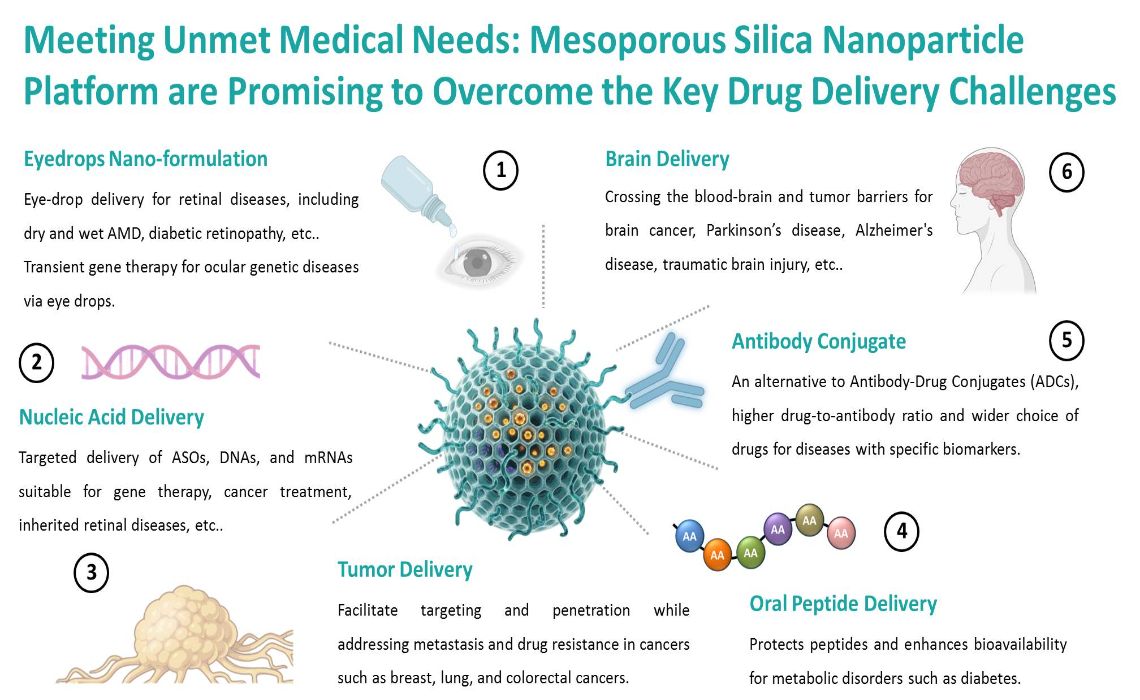
 中孔洞二氧化矽奈米粒子平台技術用於精準藥物傳輸Mesoporous Silica Nanoparticle (MSN) Platform for Precision Drug Delivery奈力生醫股份有限公司Nano Targeting & Therapy Biopharma Inc.發明人:領域:Nanomedicine, Drug Delivery Platform, Precision Medicine適應症:CNS Diseases, Oncology, Retinal Diseases研發階段:Approaching IND-Ready摘要:Nano Targeting and Therapy (NTT) Biopharma is an IND-ready stage biotechnology company leveraging mesoporous silica nanoparticle (MSN) technology to transform drug delivery and enable precision therapeutics.
We specialize in advanced nanoparticle engineering to develop innovative delivery solutions for small molecules, peptides, and nucleic acids, including antisense oligonucleotides (ASOs), mRNA and DNA fragments for transient gene therapy applications.
Platform Technology
NTT’s proprietary mesoporous silica nanoparticles (MSNs) provide a highly tunable drug delivery platform with superior loading capacity, targeted delivery, and improved therapeutic efficacy with reduced side effects.
MSN platforms are designed to overcome major biological barriers and limitations of traditional delivery methods for complex drug delivery issues in areas like central nervous system (CNS) disorders, refractory oncology, and ophthalmic/retinal diseases.
Therapeutic Focus
NTT is leveraging its MSN platform for a range of high-impact medical applications, including:
1. CNS Diseases: Enabling the transport of drugs across the BBB for treating diseases, such as brain cancer, traumatic brain injury, etc..
2. Ophthalmic Diseases: Developing MSN-based eyedrop formulations to deliver therapeutics for retinal diseases, such as dry and wet-AMD
3. Cancer: Facilitating targeting and penetration while addressing metastasis and drug resistance in cancers such as brain, colorectal, liver, cholangiocarcinoma, and Epstein-Barr virus–associated cancers.
4. Genetic and Rare Diseases: Advancing transient gene therapies or the use of antisense oligonucleotides using MSNs to safely and efficiently transport nucleic acids into target cells.
5. Metabolic and Gastrointestinal Disorders: Enhancing oral peptide delivery to improve patient compliance and therapeutic outcomes.
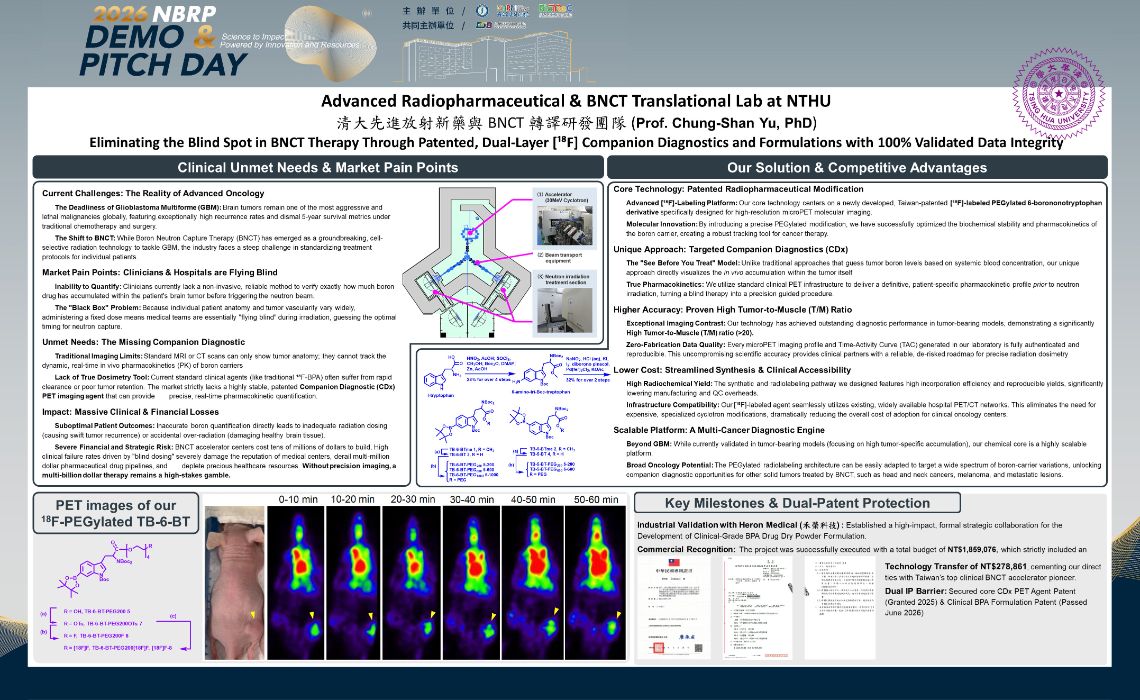
 透過獲證專利的雙層 [¹⁸F] 伴隨式診斷與劑型技術,輔以 100% 驗證的真實數據誠信,徹底消除硼中子捕獲治療(BNCT)的盲目投藥盲點Eliminating the Blind Spot in BNCT Therapy Through Patented, Dual-Layer [¹⁸F] Companion Diagnostics and Formulations with 100% Validated Data Integrity清大先進放射新藥與 BNCT 轉譯研發團隊Advanced Radiopharmaceutical & BNCT Translational Lab at NTHU俞鐘山Chung-Shan Yu發明人:俞鐘山領域:硼中子癌症治療, 核子醫學造影適應症:腦癌, 頭頸癌, 與其他腫瘤研發階段:臨床前0期摘要:氟十八標幟聚乙醇化硼化色胺酸分子技術用以定量活體小鼠硼累積濃度之技術開發專利, 並與禾榮醫療科技之產學合作硼化BPA乾粉配方專利核定與技術授權之經驗, 奠定未來上述氟硼分子的臨床工作推展應用之基礎o